

Introduction
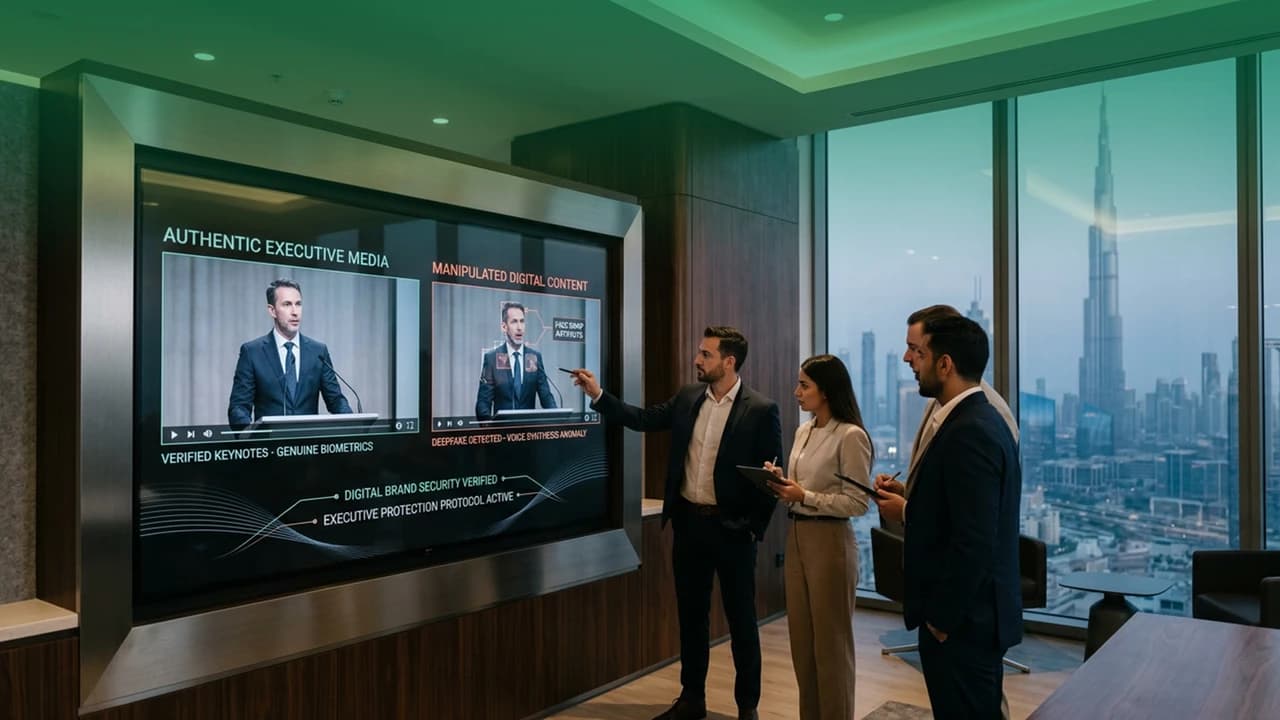
Thanks to the widespread use of digital technology and AI, deepfakes have emerged as one of the most significant concerns facing businesses across the Middle East. The impact of deepfakes ranges from impersonating executives to spreading misinformation. This type of synthetic media can damage reputations, erode digital trust in UAE, undermine stakeholder confidence, and expose organizations to financial and operational losses.
As AI technologies become more sophisticated and potent, companies in the UAE and across the GCC are discovering that protecting reputation now extends far beyond traditional media monitoring. At Pella Dynamics, Dubai’s leading PR firm, we believe organizations are expected to integrate communications, cybersecurity, and crisis preparedness to safeguard their brands in the age of synthetic content.
Pella Dynamics · PR Agency
Talk to our Digital PR team
We build narrative authority for brands across MENA and beyond. Let us shape how your audience sees you.

What Exactly Are Deepfakes and Why Should Businesses Care?
Here is all you need to know about deepfakes and AI cybersecurity Middle East.
- Deepfakes are AI-generated or AI-manipulated audio, video, or image content created to properly mimic real individuals.
- These use advanced machine learning techniques. Using these, cybercriminals can create fabricated videos of CEOs, alter public speeches, or generate fake voice recordings that appear authentic.
- In a reputation-sensitive, trust-valuing market like the Middle East, deepfakes pose a catastrophic business threat with damaging repercussions.
- Although deepfakes started off as a consumer-level concern, they have since evolved into a major enterprise challenge.
- According to Pella Dynamics’ market research, digital identity fraud attempts have increased significantly worldwide. Also, AI-generated impersonation attacks are becoming increasingly common across financial solutions, government, and corporate sectors.
As mentioned earlier, for Middle Eastern enterprises, the stakes are especially high because reputation, trust, and executive credibility are fundamental drivers of business relationships.
The rise of Deepfake security strategies is, therefore, an essential boardroom priority.
How Big Is the Deepfake Threat Globally and in the Middle East?
The scale of the challenge is expanding rapidly.
- Recent studies indicate alarming statistics regarding the commercial impact of deepfakes. For example, Deloitte predicts that AI-enabled fraud losses could exceed US$40 billion in the US by 2027. This raises concerns about synthetic media, which is increasingly being weaponized for commercial purposes.
- Meanwhile, PwC Middle East research indicates that cyber threats remain among the top concerns for GCC executives. The data shows that regional businesses should remain alert and recognize escalating digital threats.
- As the UAE's digital economy initiatives continue accelerating AI adoption across industries, enhanced AI adoption increases vulnerability.
- As governments across the GCC accelerate digital transformation initiatives, organizations simultaneously face rising exposure to Deepfake fraud and identity manipulation.
Why Are Middle Eastern Businesses Particularly Vulnerable?
Middle Eastern businesses operate within highly interconnected ecosystems characterized by strong executive visibility and deep media scrutiny. Also, the market shows relationship-driven commerce, and extensive digital engagement.
Several factors increase vulnerability. Some of the major factors are:
- High-profile spokesperson/ leadership communications.
- Extensive use of social media by executives.
- Cross-border/ global business operations.
- Large multinational workforces.
- Swift digital transformation initiatives.
- Heavy dependence on reputation and trust.
The criticality of maintaining digital trust in UAE markets can hardly be overstated. One single manipulated video involving a company spokesperson or senior executive can boomerang across digital channels and influence investor sentiment, customer confidence, and media narratives.
What Types of Deepfake Attacks Target Enterprises?
Businesses in Dubai are prone to encounter different forms of Deepfake attacks, each presenting unique challenges.
1. Executive Impersonation
AI-powered attackers create videos or audio recordings of CEOs or senior leaders that appear to authorise fraudulent transactions. They may also disclose confidential information or publish misleading statements.
2. Financial Fraud
Synthetic voice cloning is most commonly used to deceive finance teams into transferring funds or approving unauthorized payments.
3. Reputation Manipulation
Attackers with malicious motives circulate fabricated videos showing brand executives making controversial statements or engaging in unethical conduct.
4. Market Manipulation
Publicly-listed organizations may experience stock volatility and negative dips when fake announcements circulate before verification.
5. Supply Chain Fraud
Fraudsters are expected to impersonate suppliers, partners, or procurement officials and heavily disrupt operations.
How Can Deepfakes Damage Brand Reputation?
Deepfakes undermine the very foundation of modern corporate communications in Dubai/UAE: Credibility.
A fabricated executive statement can cause all and more of these side effects:
- Higher media trials and negative media coverage.
- Social media outrage.
- Investor uncertainty.
- Employee confusion and loss of trust
- Customer distrust.
- Regulatory scrutiny.
- Long-term reputational damage.
- Loss of brand image
Unlike traditional misinformation, synthetic content appears authentic, making detection difficult for Dubai audiences and journalists alike.
For brands operating in highly competitive Middle Eastern markets, reputational recovery may require extensive PR-led communication efforts, stakeholder outreach, and crisis management interventions. Fortunately, we at Pella Dynamics specialise in all of these aspects
This makes brand security our chosen interdisciplinary function involving communications teams, legal advisors, and IT specialists.
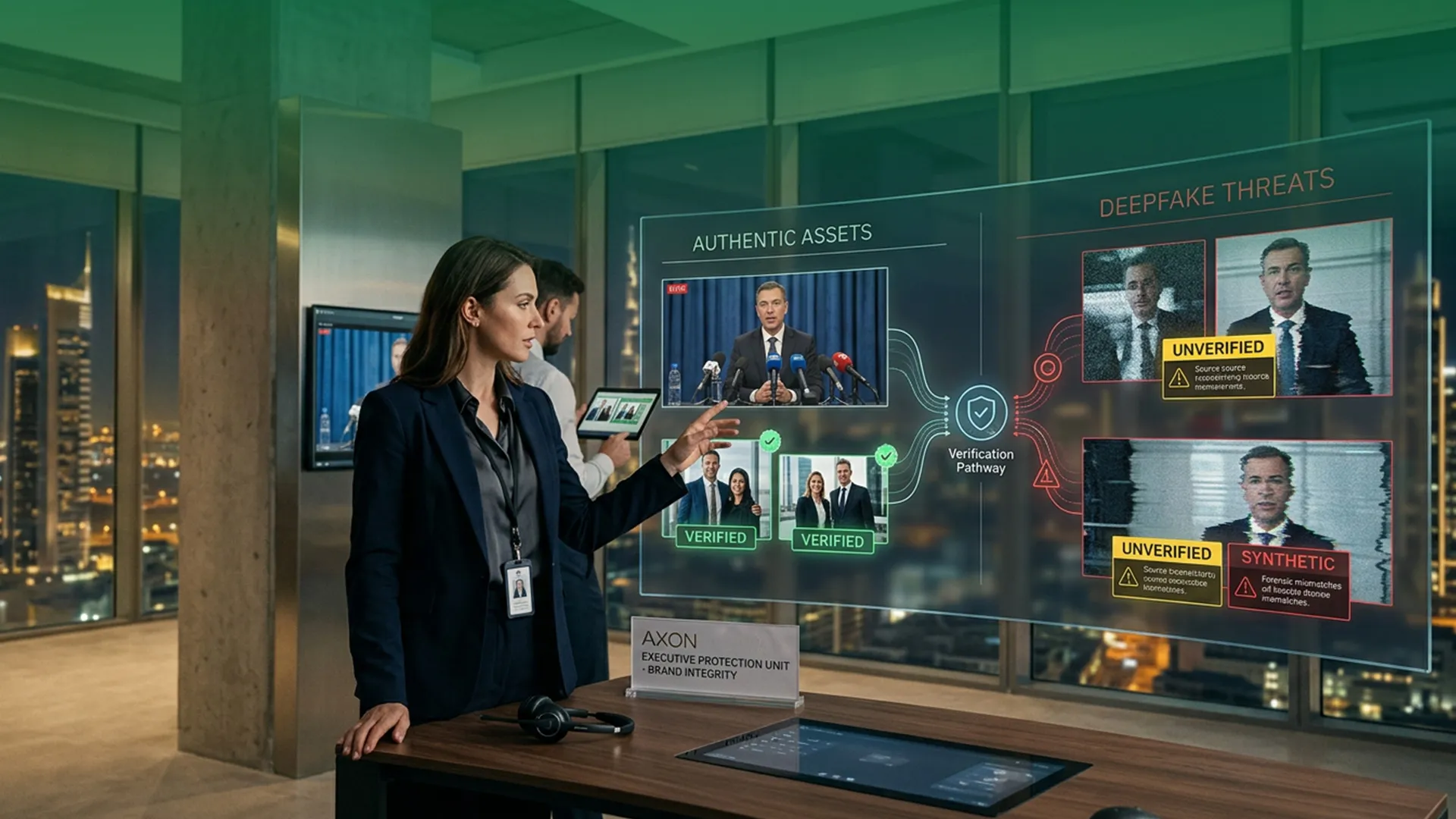
Organizations are expected to expand their corporate cybersecurity programs to address synthetic media threats through:
- Identity verification controls.
- Executive communication protocols.
- Employee awareness training.
- Multi-factor authentication.
- Media authentication procedures.
- Incident response playbooks.
The emergence of synthetic identity attack means that human verification processes are now as important as technical defences.
Which Industries Face the Greatest Deepfake Challenge in the Middle East?
Some industries in the Middle East are more susceptible to synthetic manipulation threats because they are highly visible to the public, handle many transactions, and rely heavily on trust from stakeholders. A 2025 Deloitte report says banks and financial companies around the world could lose more than US$40 billion to fraud using AI by 2027. PwC Middle East also finds that cyber and reputation risks remain top worries for local business leaders.
| Industry | Deepfake Threat | Relevant Market Context |
|---|---|---|
Banking and Financial Solutions | Payment fraud, executive impersonation | The UAE's banking sector handles more than US$1 trillion in assets. This makes it a tempting target for cybercriminals. Our research shows that fraud caused by AI could cost the US up to US$40 billion each year by 2027, showing the increasing danger to banks worldwide. |
Real Estate | AI-led Investor misinformation, reputational attacks | Dubai recorded property transactions worth more than AED 760 billion in 2025, according to the Dubai Land Department. It was found that investors rely heavily on digital communication and executive visibility, and that manipulated content can significantly impact buyer confidence and project credibility. |
Healthcare | Spurious medical communications | The GCC healthcare market is expected to surpass US$135 billion by 2027. Deepfakes cantering around physicians, hospitals, or healthcare brands can spread misinformation rapidly, potentially affecting patient trust and public health outcomes. |
Government Contractors | Sensitive information exposure | Governments including the Dubai Govt, in the GCC are investing billions in smart city and digital transformation initiatives. Local Contractors handling critical infrastructure and public-sector projects face heightened challenges from impersonation attacks along with synthetic misinformation campaigns. |
Technology | Intellectual property loss | The Middle East's digital economy is flourishing. By 2031, the UAE alone is aiming to increase the digital economy's contribution to GDP to 20%. Technology companies, therefore, face growing threats related to intellectual property theft, executive impersonation, and data manipulation. |
Energy and Utilities | Disinformation campaigns | The Middle East is responsible for over 33.33% of global oil production. Given the strategic importance of the energy sector, false announcements or manipulated executive communications triggers market volatility thereby making organizations invest in Enterprise cybersecurity UAE |
Hospitality | Brand impersonation, scams and malicious content | Tourism makes up a large 12% of the UAE's economy, with Dubai welcoming 18 million visitors from other countries in 2025. Fake videos, fake ads, and scams pretending to be hotel brands can hurt customer trust and cause major financial losses. |
As organizations across the multiple industries listed above and more, accelerate digital transformation, deepfake preparedness is expected to become a strategic priority rather than a reactive measure. Industries that depend heavily on reputation, executive credibility, and digital engagement are likely to face the greatest exposure in the coming years.
Organizations operating in these sectors are expected to prioritize proactive concern management initiatives.
How Can Businesses Detect Deepfakes Effectively?
Successful Deepfake detection requires combining technology, governance, and human expertise.
Businesses are expected to implement the following measures:
Deploy AI Detection Platforms
Specialized software analyses inconsistencies in facial movements, speech patterns, lighting, and digital artifacts.
Establish Verification Protocols
Sensitive requests involving payments, disclosures, or strategic announcements are expected to always require independent verification.
Monitor Digital Channels Continuously
Real-time social listening enables organizations to identify suspicious content before it gains widespread traction.
Conduct Media Authentication
Corporate communications teams are expected to verify all high-profile content before distribution or response.
Train Employees
Employees remain the first line of defence. Staff is expected to learn to identify anomalies such as unnatural speech cadence, inconsistent lip movements, or unusual behavioural cues.
What Role Does Communications Strategy Play During a Deepfake Crisis?
Technology alone can find it challenging to protect organizational reputation.
When a synthetic attack occurs, communications speed and transparency become critical and this is where specialised human talent from a leading PR agency becomes indispensable.
At Pella Dynamics, we advise organizations to prepare detailed crisis communication frameworks that include:
Immediate Verification Procedures
Rapidly determine whether disputed content is authentic or manipulated.
Centralized Messaging
Strictly ensure authorized spokespersons communication.
Stakeholder Notification Plans
Inform employees, customers, investors, regulators, and partners promptly.
Media Engagement Protocols
Deliver verified facts to journalists to prevent misinformation amplification.
Social Media Response Plans
Address false narratives quickly across digital platforms.
A trusted PR Agency in Dubai can play an instrumental role in coordinating media responses and preserving stakeholder confidence during high-pressure situations.
How Is Enterprise Cybersecurity Evolving in the UAE?
The UAE has positioned itself as a global leader in AI adoption and digital transformation. While this creates significant business opportunities, it also expands the attack surface.
Consequently, strategies for enterprise cybersecurity in UAE are evolving from purely technical defence models towards integrated resilience frameworks that combine cyber protection, communications, governance, and reputation management.
Forward-looking enterprises increasingly recognize that cyber resilience and brand resilience are inseparable. Alliance with the forward-looking Dubai PR Agency can assist organizations to build this resilience that emphasizes authenticity, transparency, and trust.
How Can AI Protect Against Deepfakes?
Ironically, AI is responsible for deepfakes and it itself represents one of the strongest defences against it.
Advanced AI systems can:
- Detect manipulated media.
- Identify anomalous communication patterns.
- Monitor brand mentions in real time.
- Flag suspicious executive impersonation attempts.
- Analyse emerging misinformation trends.
The growth of initiatives related to AI cybersecurity in Middle East demonstrates how regional organizations are leveraging artificial intelligence to innovate and protect their digital ecosystems.
AI-enabled monitoring tools can significantly reduce detection times and improve crisis response effectiveness.
What Happens When PR and Cybersecurity Teams Work Together?
In the past, cybersecurity and communications teams operated independently.
Deepfakes have eliminated that separation and created the scope of a symbiotic defence that involves AI-driven cybersecurity experts and PR teams working together. While cybersecurity teams identify and investigate synthetic attacks, communications teams manage public narratives, stakeholder trust, and reputation recovery.
A symbiotic governance model that we follow at Pella Dynamics ensures faster decision-making, consistent messaging, reduced misinformation spread, and stronger stakeholder confidence.
Many organizations now partner with a specialized Dubai PR Agency alongside cybersecurity consultants to establish coordinated response frameworks.
Similarly, engaging an experienced PR Agency in Dubai allows businesses to strengthen crisis preparedness before incidents occur.
Conclusion
In conclusion, organizations that act proactively will be better positioned to maintain trust, protect reputation, and preserve stakeholder confidence in an increasingly AI-driven business environment.
About the Author
Elgy Santhosh
Pella Dynamics

 +971 58 164 4290
 info@pelladynamics.com
